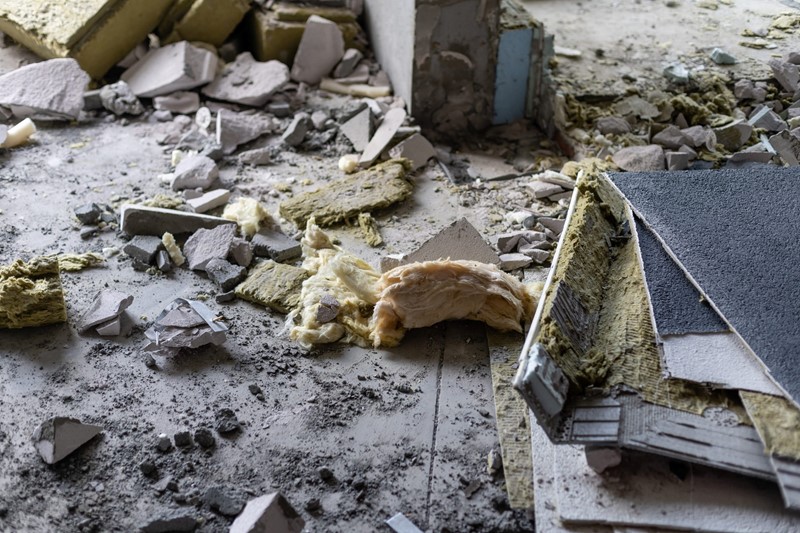
The High Court delivered critical resolutions to three pivotal questions in a case of complex private landlord-tenant litigation, clarifying the requirements of notice under the Section 9A regime, the limits of specific performance when enforcing statutory fitness, and whether private tenants possess a right to a landlord-funded temporary relocation, known legally as a "decant," while remedial works are executed.
Background:
This case concerns a housing disrepair claim brought by a family of six tenants (a husband, wife, and their four children aged 16, 12, 11 and 7) against their landlord in respect of a four-bedroom, mid-nineteenth-century property located near Chichester, West Sussex. The first defendant, Polly Louise Heaver, is the landlord, while the second defendant, Southernbook Lettings Ltd, is the managing agent, which took no active part in the condition issues.
The claimants alleged breaches of the landlord's implied covenants under Sections 11 and 9A of the Landlord and Tenant Act (LTA) 1985 (as amended by the Homes [Fitness for Human Habitation] Act (HFHH) 2018) — namely, the covenants to keep the property in repair and fit for human habitation. The claim was backed by an undisputed single joint expert report detailing systemic building failures, including pervasive damp, a damaged asbestos ceiling in a bedroom, a broken septic tank vent pipe, a cracked oil tank cap, and a structural rodent infestation.
They sought specific performance requiring the landlord to carry out repair works, provision and payment for temporary alternative accommodation (a 'decant'), and damages for past breaches. The claimants also advanced personal injury and Equality Act 2010 discrimination claims, which earlier case-management orders (Soole J and Master Byass) had directed be tried separately and, given the High Court's lack of jurisdiction over the Equality Act claim, transferred to the County Court.
Decision:
The High Court declared that the landlord was in breach of the implied covenant under Section 9A(1)(b) because the property was unfit for human habitation as of 25 June 2026. Addressing the unsettled legal question of whether Section 9A implicitly requires a tenant to give formal notice of a defect before liability arises, the Judge bypassed the issue on the facts, ruling that the landlord's actual knowledge via the legal proceedings and expert reports fully satisfied any notice requirement. To remedy the unfitness, the Court granted an order for specific performance under Section 9A(5), explicitly mapping the required works to the single joint expert's report. The order mandated the execution of all Table 1 structural works alongside selected Table 2 items addressing the asbestos ceiling, the septic vent pipe, the oil tank cap, and the rodent infestation, while excluding electrical items already repaired and non-essential boundary works.
Conversely, the Judge refused the tenants' application for a landlord-funded decant, ruling that private tenants have no freestanding right to temporary rehousing and that the single joint expert had not deemed vacation to be mechanically necessary for the repairs to occur. The Judge made no findings on historic fitness, the timing of notice, apportionment of responsibility, alleged Section 11 repairing breaches, or the 'inherent defect' question.
Implications:
The ruling delivers vital clarity on how courts handle the requirement of notice, the limits of specific performance, and whether private tenants possess a freestanding right to a landlord-funded decant while remedial works are executed.
This decision highlights that the Section 9A duty operates as an absolute, objective standard focused squarely on the present safety of the occupants. Landlords cannot utilise pending litigation, corporate restructuring arguments, or belated allegations of tenant lifestyle choices to stall emergency structural repairs. When a property exhibits saturation-level dampness or damaged asbestos, the Court will isolate the immediate need for physical safety from the slower process of financial apportionment, granting swift orders for specific performance mapped directly to expert evidence. Further, the refusal of the decant application confirms that, while private tenants can recover relocation costs as consequential damages at the final quantum stage of a trial, they cannot demand upfront interim funding for alternative accommodation from a private landlord unless deemed to be absolutely and mechanically necessary by a structural expert.