When structural defects put a building’s safety at risk, landlords and leaseholders often find themselves locked in a fierce legal battle over who controls the method of repair and how much disruption a tenant must endure.
Background:
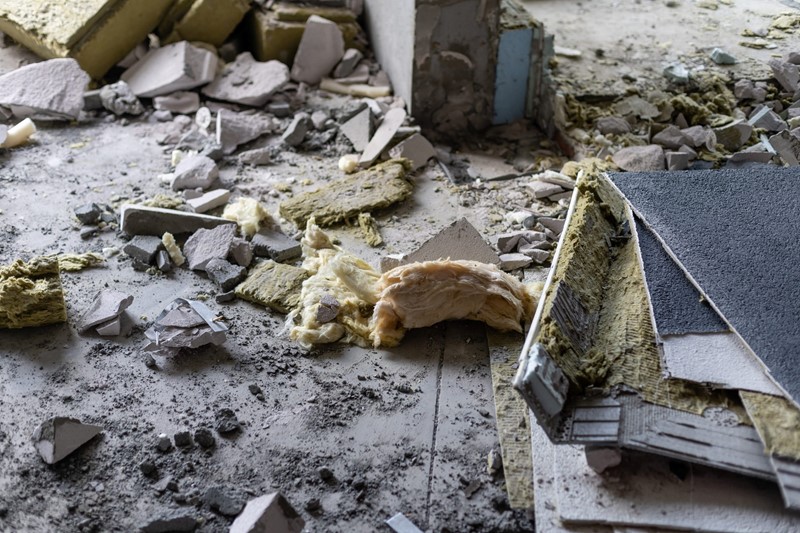
This litigation arose from a complex structural dispute at 1/1A The Drapery, a multi-storey building featuring ground-floor commercial units, a loading bay, a refuse store, and twenty-five residential flats on the first to fourth floors. The claimant holds the registered freehold reversion of the building, which it acquired on 16 May 2017. The defendant is the long lessee of the residential upper floors under a 999-year lease dated 24 December 1999, having taken an assignment of the unexpired term on 3 February 2016. The relationship between the parties deteriorated significantly after a dramatic structural failure on 16 August 2022, when a substantial section of the ground-floor loading bay ceiling collapsed directly beneath Flats 16 and 17 on the first floor. The collapse exposed historic water ingress and extensive wet rot inside seven structural timber floor joists supporting the first floor. Investigations by a building mycologist, Dr. Singh, confirmed severe fungal degradation, with wet rot tracking up to 2.3 metres along the timber spans, leading to an extensive section loss.
In November 2023, the Northamptonshire Fire and Rescue Service issued a statutory enforcement notice prohibiting the use of Flats 16 and 17 as sleeping accommodation due to the breached fire-compartmentation boundaries between the commercial loading bay and the residential apartments. The defendant subsequently launched a counterclaim for £9,404.30 in lost rental revenue, alleging that the freeholder had breached its repairing covenant by deliberately leaving the ceiling exposed after removing fire-retardant panels in April 2023 for expert inspections. The claimant denied any breach, asserting that any delay was entirely attributable to the defendant's ongoing refusal to grant access to the flats. Backed by its expert structural engineer, Mr. David Smith, the freeholder argued that the replacement could only be safely executed from above.
This required entering Flats 16 and 17, dismantling the bathrooms, removing floor finishes, and demolishing internal partition walls—a process initially estimated to take ten weeks and require the flats to be vacated. The claimant sought specific performance and an injunction under clauses 16.1(a) and 16.1(d) of the lease to compel access. The defendant resisted, relying on its covenant for quiet enjoyment under clause 25.1.
Decision:
The High Court ruled in favour of the freeholder, granting an injunction for structural access from above and narrowing the disputed timeline, while dismissing the leaseholder's counterclaim. Turning to the leasehold covenants, the Court resolved the friction between the landlord's duty to repair and the tenant's right to quiet enjoyment by applying a strict test of contractual interpretation and reasonableness. The Judge accepted that under Holy v Brentford Lock Island Residents' Association Ltd, the party bound by a repairing covenant has the initial right to choose how to remedy a defect. However, as established in Century Projects Ltd v Almacantar (Centre Point) Ltd, neither the covenant to repair nor the covenant for quiet enjoyment trumps the other as they must be fitted together through a fact-sensitive exercise grounded in reasonableness. The Court rejected the defendant’s reliance on McGreal v Wake, clarifying that English law does not impose an inflexible "all possible steps" or "absolute necessity" rule that bans a landlord from displacing a tenant unless no other theoretical method exists. Instead, applying Goldmile Properties Ltd v Lechouritis, the standard is whether the landlord has taken all reasonable precautions to minimise disturbance.
On the facts, the Court found that six of the seven joists were too degraded for localised patching and had to be replaced. Further, the Judge found that executing the repairs from below was practically unfeasible and structurally dangerous. However, the Court found that the claimant's demanded ten-week vacation period violated its obligation to cause as little disturbance as reasonably practicable. Based on the evidence of the project manager, Mr. Jonathon Grove, the core engineering works required four to six weeks. The Judge therefore restricted the period of exclusive possession to a maximum of six weeks and entirely denied the claimant's disproportionate request for a preliminary two-day exclusive possession window for inspections. Finally, the Court dismissed the defendant's counterclaim. Although the Judge found that the freeholder had breached its covenant by leaving the ceiling exposed to exert tactical pressure on the leaseholder, the defendant failed to provide sufficient documentary evidence to prove the fact and an exact financial quantum of its rental losses.
Implications:
This judgement provides essential clarification on how English courts handle major property renovations and structural access disputes. The primary takeaway is that, if a lease places the responsibility for maintaining the structural framework, foundations, or communal floors of a building on the landlord, the landlord holds the legal right to select the appropriate method of repair. A leaseholder cannot force a freeholder to accept a superficial or temporary “patch-up” if a complete replacement is recommended by qualified professionals, particularly under long-term leases where durable solutions are legally obligated. Further, while a leaseholder’s right to quiet enjoyment ensures peaceable possession, it is not an absolute barrier against critical maintenance. In other words, your right to occupy must coexist with the landlord's operational duty to keep the wider building safe, and the courts will legally compel access where major engineering works require temporary displacement.
This decision also underscores that modern property litigation is heavily dominated by statutory health and safety legislation, notably the Construction, Design and Management (CDM) Regulations 2015. When structural engineers design a project, they are legally bound to prioritise risk avoidance, meaning that, if a landlord's expert proves that working internally from inside a flat is significantly safer than working blindly from a ceiling cavity below, the Court will routinely sanction the more intrusive internal method to minimise physical hazard. However, this authority is tightly controlled, as landlords must strictly adhere to provisions requiring them to cause as little disturbance as is reasonably practicable. If a freeholder attempts to inflate a construction timeline to include excessive administrative cushions or demands exclusive possession for basic visual inspections, the Court will aggressively trim those requests down to the absolute operational minimum, making realistic, evidence-backed project scheduling vital before seeking formal court enforcement.